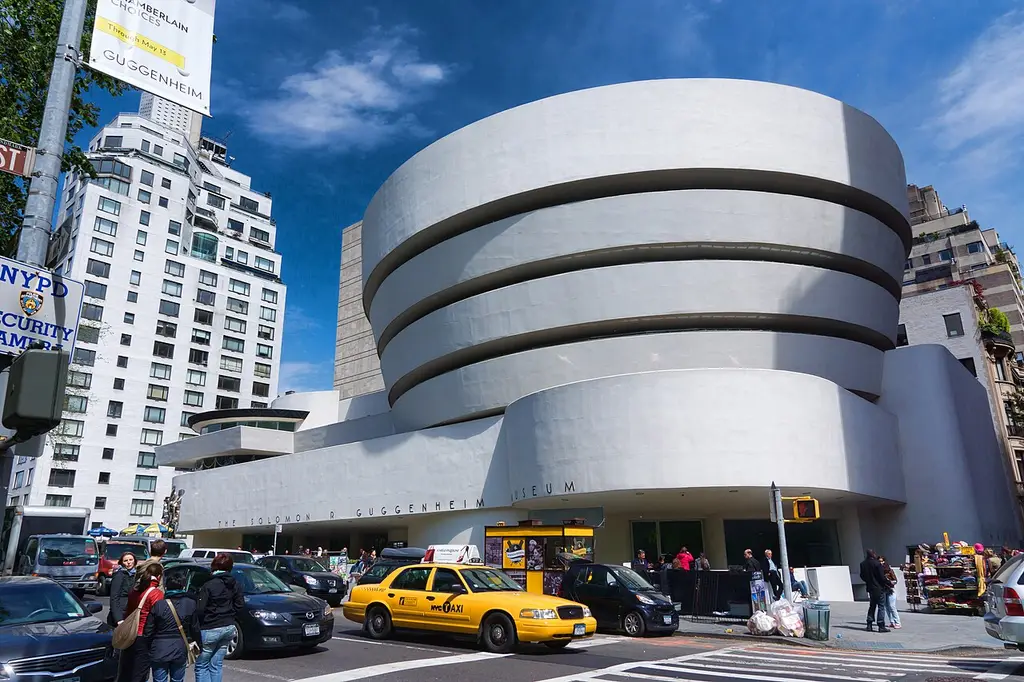

Frank Lloyd Wright's spiral, I. M. Pei's glass pyramid on Lake Erie, Calatrava's moving wings. These museums are worth visiting for the architecture alone.
Most museums are designed to disappear around the art. A few do the opposite: the building itself becomes the reason to go. Here are seven American museums where the architecture is as memorable as anything on display.
Solomon R. Guggenheim Museum, New York
Frank Lloyd Wright spent years designing the Guggenheim, which opened on Fifth Avenue in 1959, shortly after his death. Instead of a sequence of rooms, visitors walk a single continuous ramp that spirals up beneath a skylit dome, seeing art and the crowd across the rotunda at the same time.
Fallingwater, Pennsylvania
Wright's most famous house was built in the 1930s for the Kaufmann family and cantilevered directly over a waterfall in the Laurel Highlands. Today it is a house museum, and guided tours show how closely the building is woven into the rock, trees and stream.


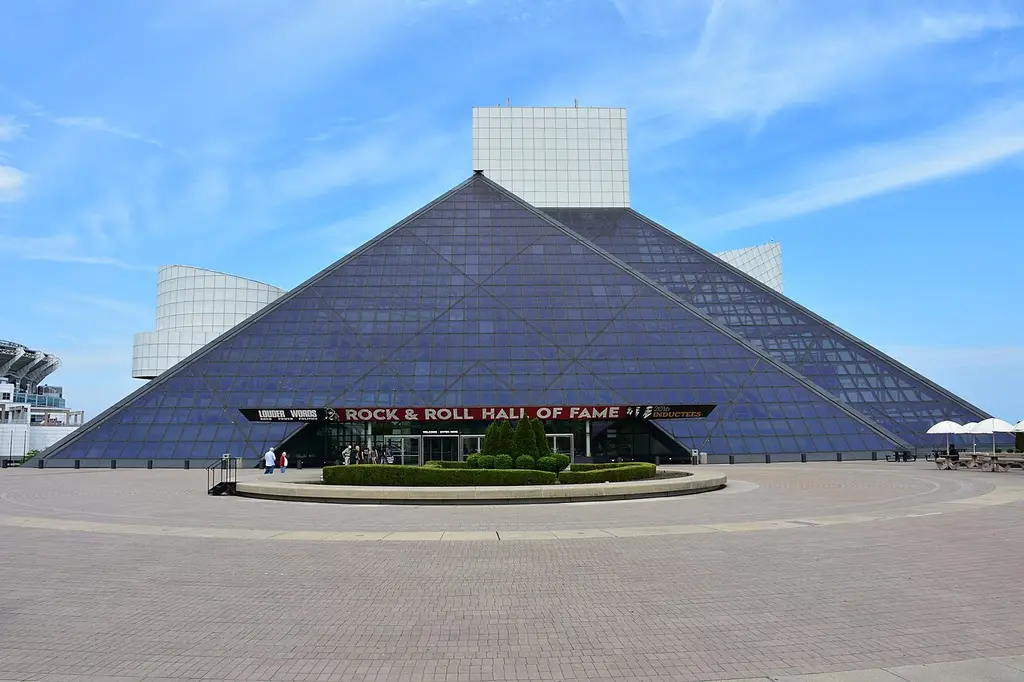
Rock and Roll Hall of Fame, Cleveland
I. M. Pei, also behind the glass pyramid at the Louvre, gave Cleveland's lakefront a dramatic glass tent of its own. The Rock and Roll Hall of Fame opened in 1995, with angular wings projecting out over Lake Erie.

Milwaukee Art Museum
Santiago Calatrava's Quadracci Pavilion, completed in 2001, is crowned by a sunscreen of steel fins that opens and closes like a pair of wings. It sits beside Eero Saarinen's earlier war memorial building, making the museum a small history of modern architecture on one site.
Getty Center, Los Angeles
Richard Meier's hilltop campus pairs travertine stone with white metal panels and terraced gardens, with views from the mountains to the Pacific. Visitors arrive by a small tram that climbs up from the parking area, which makes the arrival feel like part of the experience.


Kimbell Art Museum, Fort Worth
Louis Kahn's Kimbell, opened in 1972, is a quiet masterpiece: a series of long cycloid vaults that wash the galleries in soft natural daylight. Renzo Piano's pavilion across the lawn, added in 2013, echoes it in a lighter, more transparent language.
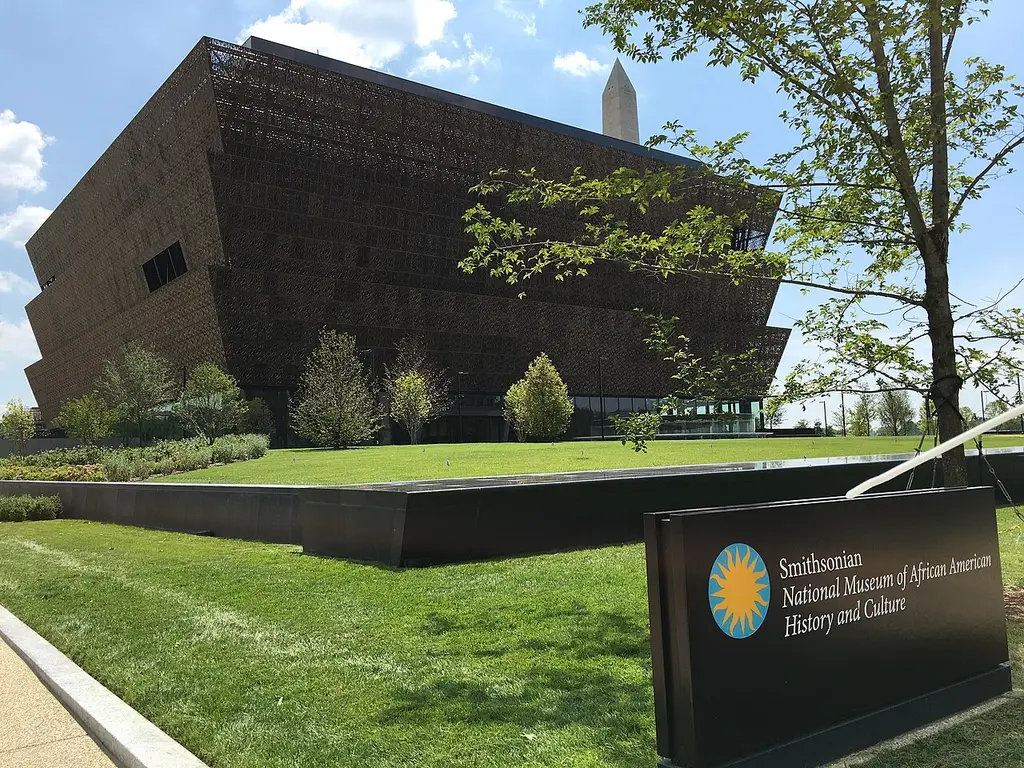
National Museum of African American History and Culture, Washington, D.C.
Designed by a team led by David Adjaye and Phil Freelon, the museum's tiered bronze-toned "corona" stands out on the National Mall. Its decorative lattice pays tribute to ironwork crafted by enslaved African Americans in the South.

Plan an architecture road trip
Want more? Our homepage's Architectural icons section highlights museums designed by famous architects. Every museum page lists the architect when it's known, and you can browse art museums by state to plan a route.
Cover: Solomon R. Guggenheim Museum. Admission policies and programs change, so please confirm details with each museum before visiting.
Keep reading

Free Museums Near Me: 7 Ways to Visit America's Museums for Free
From the always-free Smithsonian to library passes and free-admission weekends, here's how to see world-class museums across the U.S. without paying for a ticket.
October 5, 2026 · 2 min read
How to Plan the Perfect Museum Day (Without Getting Museum Fatigue)
Practical tips for visiting art, history and science museums: when to go, how to pace yourself, visiting with kids, and how to find art museums near you.
September 20, 2026 · 2 min read